More information soon

Ole Nørregaard Jensen
More information soon
Ole Nørregaard Jensen is a professor at the University of Southern Denmark (SDU), Odense, whose research has contributed substantially to the development and application of mass spectrometry for protein science and proteomics. His scientific career spans more than two decades and reflects the evolution of biological mass spectrometry from protein identification toward quantitative, modification-specific and proteoform-resolved analysis.
A major focus of Jensen’s research is the development of mass-spectrometric approaches for protein characterization and post-translational modification (PTM) analysis. His work has addressed phosphorylation, acetylation, methylation and glycosylation, combining tandem mass spectrometry with computational approaches for confident identification and localization of protein modifications. He has also contributed to computational methods for interpreting complex proteomic datasets and extracting biologically meaningful protein networks.
Recently, his work has moved toward proteoform science and intact-protein mass spectrometry, integrating high-resolution MS, tandem MS and ion mobility with computational analysis. This approach seeks to characterize intact proteins as molecular entities carrying defined combinations of sequence variants and PTMs, rather than considering individual modifications in isolation. His research therefore addresses a central challenge in modern protein science: connecting molecular heterogeneity to biological function.

Tiziana Bonaldi
Associate Professor of Cellular and Applied Biology. University of Milan.
Tiziana Bonaldi, PhD is Associate Professor of Cellular and Applied Biology at the University of Milan and Tenured Group Leader at the Department of Experimental Oncology of the European Institute of Oncology (IEO), Milan, where she leads the Nuclear Proteomics to Study Gene Expression Regulation in Cancer group.
After obtaining her PhD in Molecular and Cellular Biology in Milan, she joined Axel Imhof’s laboratory at LMU Munich, where she began developing mass spectrometry-based approaches to investigate histone modifications and the epigenetic regulation of chromatin. She subsequently joined Matthias Mann’s group at the Max Planck Institute of Biochemistry in Martinsried, further developing her expertise in quantitative proteomics. In 2008, supported by a Giovanni Armenise-Harvard Career Development Award, she established her independent research group at IEO.
Her research focuses on understanding epigenetic mechanisms underlying cancer development and adaptation, using quantitative mass spectrometry-based proteomics integrated with molecular, cellular and functional genomics approaches. Her group has contributed to the development of innovative chromatin proteomics and epi-proteomics strategies, with particular emphasis on histone post-translational modifications, protein methylation, chromatin-associated regulatory mechanisms and their investigation in cancer models and clinical samples.
Tiziana Bonaldi is an EMBO Member and is actively involved in the European proteomics community through international research consortia, scientific societies, advanced training programs and conference organization.
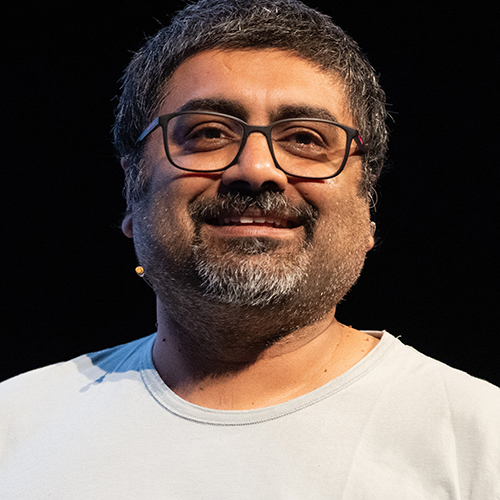
Shabaz Mohammed
Associate Professor of Proteomics. University of Oxford.
Shabaz Mohammed is Associate Professor of Proteomics at the University of Oxford, with affiliations across the Departments of Chemistry, Biochemistry and Pharmacology. Shabaz studied Chemistry at UMIST (now The University of Manchester), graduating in 1999. He subsequently joined the laboratory of Simon Gaskell, working on fundamental aspects of biological mass spectrometry and completing his PhD in 2003. He then moved to Odense, Denmark, to join Ole Jensen's group, where he helped develop a widely adopted quantitative approach for studying protein phosphorylation and its role in cellular signalling. In 2005, Shabaz joined Albert Heck's laboratory to continue developing proteomic technologies. He established his own research group as an Assistant Professor in 2008 before moving to the University of Oxford in 2013.In 2020, Shabaz was seconded to the Rosalind Franklin Institute (RFI), where he led the Mechanistic Proteomics research programme. His work there included helping the development of the Omnitrap platform and associated technologies for proteomics. Having completed his time at the RFI, he has now returned to the University of Oxford.
His research group develops new technologies to investigate proteins and their post-translational modifications with increasing sensitivity and molecular detail. This includes novel mass spectrometry instrumentation and fragmentation methods, ultra-high-performance chromatographic approaches aimed at improving sensitivity towards single-cell proteomics, and strategies for the enrichment and quantitative analysis of post-translational modifications such as phosphorylation and glycosylation. These technologies are applied to biological questions spanning transcription, the cell cycle, intracellular transport, receptor biology and cellular signalling, with the overarching aim of understanding how dynamic changes in proteins regulate cellular function.